



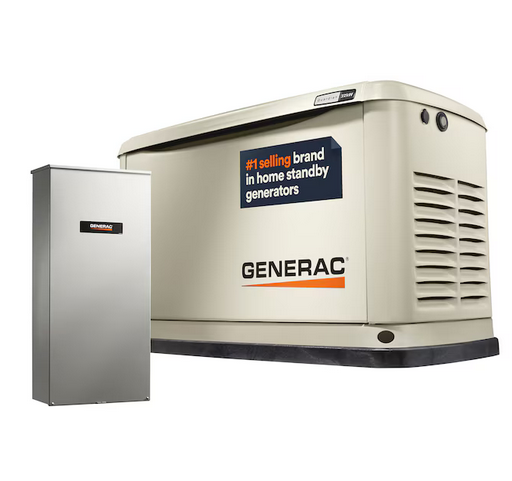
Generac Home Standby Generator w/WiFi Connectivity 22000 -Watt Dual Fuel (Liquid Propane/Natural Gas) 200-Amp Home Standby Generator Automatic Transfer Switch Included
- This Generac Guardian 22kW Air-Cooled Home Standby Generator can provide whole-house backup power with the included 200 Amp Automatic Transfer Switch
- The Generac G-Force Engine efficiently runs on natural gas or liquid propane and automatically starts within seconds of a power outage
- Corrosion-resistant finish is ideal for all weather conditions and LCD controller tracks maintenance intervals to ensure top operating condition
- Includes 5-year limited warranty with purchase
- Generac’s G-Force engine is a purpose-built, pressure-lubricated engine capable of handling the rigors of generator use, resulting in power that’s more reliable and requires less routine maintenance
- 24/7/365 Customer support team standing by all day, every day from our headquarters in Wisconsin to answer any questions you might have
- Smart, user-friendly controls, Generac’s Evolution; Controller features a multilingual LCD display that allows users to monitor battery status and track maintenance intervals to ensure your generator is always in top operating condition
- Tough, durable all-aluminum enclosures: our RhinoCoat; powder-coated finish helps make corrosion-resistant aluminum perfect for all weather conditions
- Product images may include optional fascia kit, Fascia kit sold separately
$6,155.10
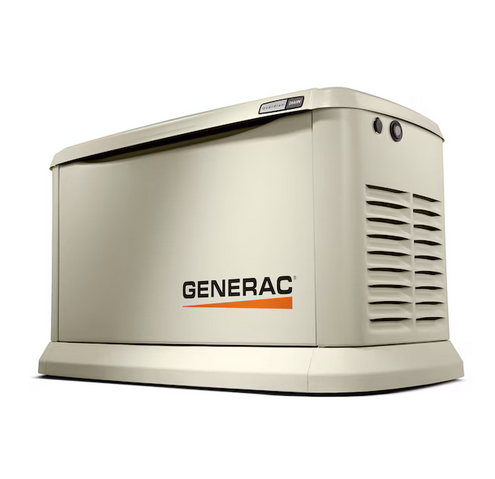
Generac Home Standby Generator w/WiFi Connectivity 26000 -Watt Dual Fuel (Liquid Propane/Natural Gas) Home Standby Generator
- This Generac Guardian 26kW Air-Cooled Home Standby Generator can provide whole-house backup power
- The Generac G-Force Engine efficiently runs on natural gas or liquid propane and automatically starts within seconds of a power outage
- Corrosion-resistant finish is ideal for all weather conditions and LCD controller tracks maintenance intervals to ensure top operating condition
- Includes 5-year limited warranty with purchase
- Generac generators and engines are engineered and built in the USA; disclaimer: assembled in the USA using domestic and foreign parts
- Generac’s, G-Force engine is a purpose-built, pressure-lubricated engine capable of handling the rigors of generator use resulting in power that’s more reliable and requires less routine maintenance than any competitive engine
- 24/7/365 Customer support team standing by all day, every day from our headquarters in Wisconsin to answer any questions you might have
- Quiet-Test self-test mode runs at a lower RPM for a five or twelve minute test, making generators significantly quieter than other brands while consuming less fuel
- Tough, durable all-aluminum enclosures: our RhinoCoat; powder-coated finish helps make corrosion-resistant aluminum perfect for all weather conditions
$6,164.10
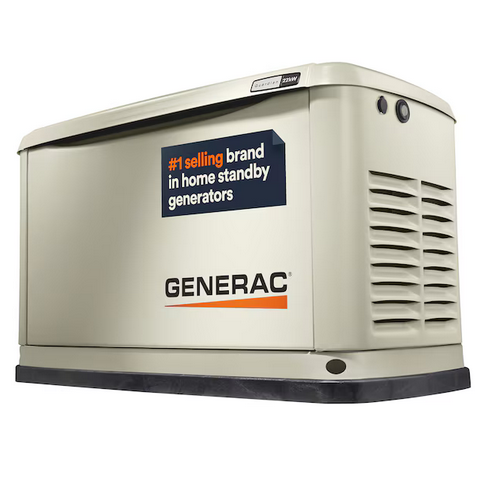
Generac Home Standby Generator w/WiFi Connectivity 22000 -Watt Dual Fuel (Liquid Propane/Natural Gas) Home Standby Generator
- This Generac Guardian 22kW Air-Cooled Home Standby Generator can provide whole-house backup power
- The Generac G-Force Engine efficiently runs on natural gas or liquid propane and automatically starts within seconds of a power outage
- Corrosion-resistant finish is ideal for all weather conditions and LCD controller tracks maintenance intervals to ensure top operating condition
- Includes 5-year limited warranty with purchase
- Generac’s G-Force engine is a purpose-built, pressure-lubricated engine capable of handling the rigors of generator use, resulting in power that’s more reliable and requires less routine maintenance
- 24/7/365 Customer support team standing by all day, every day from our headquarters in Wisconsin to answer any questions you might have
- Tough, durable all-aluminum enclosure
$5,399.10
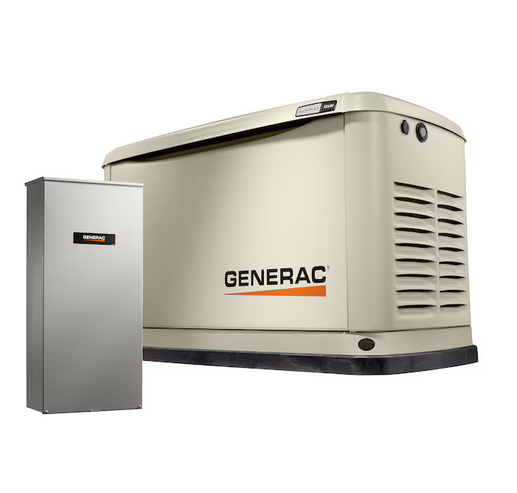
Generac Home Standby Generator w/WiFi Connectivity 18000 -Watt Dual Fuel (Liquid Propane/Natural Gas) 200-Amp Home Standby Generator Automatic Transfer Switch Included
- This Generac Guardian 18kW Air-Cooled Home Standby Generator can provide whole-house backup power with the included 200 Amp Automatic Transfer Switch
- The Generac G-Force Engine efficiently runs on natural gas or liquid propane and automatically starts within seconds of a power outage
- Corrosion-resistant finish is ideal for all weather conditions and LCD controller tracks maintenance intervals to ensure top operating condition
- Includes 5-year limited warranty with purchase
- 24/7/365 Customer Support Team standing by all day, every day from our headquarters in Wisconsin to answer any questions you might have
- Quiet-Test Self-Test Mode runs at a lower RPM for a five or twelve minute test, making generators significantly quieter than other brands while consuming less fuel
- Tough, Durable All-Aluminum Enclosures: Our RhinoCoat; powder-coated finish helps make corrosion-resistant aluminum perfect for all weather conditions
- Smart, User-Friendly Controls – Generac’s Evolution; Controller features a multilingual LCD display that allows users to monitor battery status and track maintenance intervals to ensure your generator is always in top operating condition
- Receive a FREE 5-Year Extended-Limited warranty (495 dollar value) with the download and purchase of Mobile Link, the smartphone app that monitors your generator and provides you peace of mind before the next power outage, Terms and conditions apply
$5,498.00
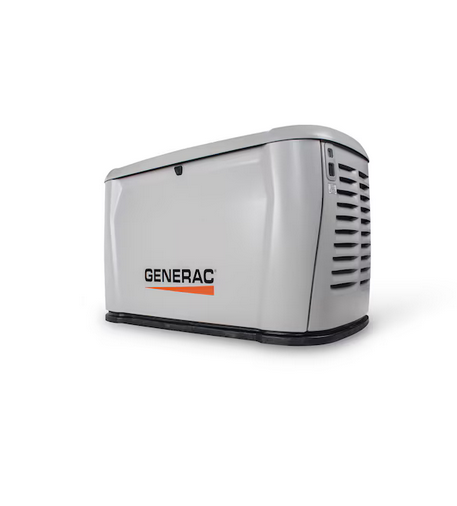
Generac Next Generation 14000 -Watt Dual Fuel (Liquid Propane/Natural Gas) Home Standby Generator
- Keep your family comfortable with hole House Protection
- Avoid the disruption of losing refrigeration, heating/cooling, lights and connectivity of your devices with a Home Standby Generator that automatically detects an outage and delivers backup power to your home
- Lowest Total Cost Of Ownership
- Remote Monitoring & Control: Built-in Cellular Connectivity allows you to monitor performance and control your generator with Mobile Link app whether you’re home or away.
- Superior Reliability: Oil level sensors monitor oil level to help ensure generator readiness, support in cold climates with improved cold start performance and sloped roof and rear intake to reduce risk of ice or snow intrusion
- Compatible with the Generac Home Energy Ecosystem, compatible with ecobee by Generac thermostats and Generac PWRcell battery systems to seamlessly monitor and control your home’s energy
- Long Term Assurance: Every Generac Standby Generator comes with a 5-year limited warranty and 24/7/365 customer support
- Generac recommends your new Home Standby Generator to be installed by a certified and licensed electrician; visit our installation page to learn more
$4,799.00
How I Stopped Worrying About Blackouts and Learned to Love Automatic Backup Power
I’ll never forget the Great Northeast Blackout of 2003. I was in my basement office, frantically trying to save a presentation due the next morning, when everything went dark. My computer died. My files vanished. My deadline became impossible. That single experience cost me a major client and taught me an expensive lesson about preparedness.
Fast forward to today, and I’ve become something of a standby generator enthusiast. After years of research, multiple installations, and countless conversations with electricians, contractors, and fellow homeowners, I’ve gathered insights that go far beyond what you’ll find in typical product reviews. This is the buying guide for generators standby that I wish I’d had when I started this journey.
What Exactly Is a Standby Generator, and How Does This Technology Actually Work?
Let me start with the basics, because understanding the technology helps you make smarter purchasing decisions. A standby generator is a permanently installed backup power system that automatically detects when your utility power fails and switches on within seconds. It’s not something you wheel out of your garage and manually start during a storm—it’s an always-ready guardian that sits outside your home, waiting patiently for its moment to shine.
Here’s how the magic happens. The generator connects directly to your home’s electrical panel through what’s called an automatic transfer switch. This intelligent device constantly monitors the incoming utility power. The moment it detects an interruption, it signals the generator to start. Within ten to thirty seconds, the generator fires up, and the transfer switch redirects power from the utility lines to the generator. Your lights flicker briefly, your refrigerator hums back to life, and you barely notice the transition.
The fuel source varies, but most standby generators run on natural gas or liquid propane. They draw fuel from the same lines that supply your furnace, water heater, or stove, which means they can theoretically run indefinitely as long as the fuel supply continues. When utility power returns, the transfer switch detects this too, smoothly transitions back to grid power, and tells the generator to shut down. The whole system then enters standby mode again, ready for the next outage.
What Are the Best Standby Generators for Home Use Right Now?
After reviewing dozens of models and talking to homeowners who’ve lived with these systems for years, I’ve identified several outstanding options. The “best” generator depends on your specific needs, but certain models consistently rise to the top.
Generac has dominated the residential market for good reason. Their Guardian series offers exceptional reliability with sizes ranging from seven kilowatts to twenty-four kilowatts. I’ve seen these units perform flawlessly in neighborhoods from Florida to Minnesota, handling everything from hurricane outages to winter ice storms. The mobile link technology lets you monitor your system from your smartphone, which proved invaluable when I was traveling and a storm knocked out power at home.
Kohler represents the premium end of the spectrum. Their generators cost more upfront, but the build quality justifies the investment. I’ve inspected ten-year-old Kohler units that look and perform like they were installed yesterday. The sound attenuation technology makes them noticeably quieter than competitors, which matters tremendously if you live in a neighborhood with close property lines.
Briggs & Stratton offers compelling value in the mid-range market. Their Fortress series provides solid performance without the premium pricing of Kohler. I wouldn’t recommend them for the most demanding applications, but for typical suburban homes, they deliver excellent results.
Cummins entered the residential market more recently but brought commercial-grade engineering expertise with them. Their QuietConnect series lives up to its name, operating at sound levels that won’t disturb conversations on your patio. The corrosion-resistant materials make them particularly suitable for coastal environments where salt air destroys lesser equipment.
How Much Does a Standby Generator Actually Cost When You Factor Everything In?
This question always generates sticker shock, so let me break down the real numbers. The generator unit itself ranges from three thousand dollars for a basic seven-kilowatt air-cooled model to fifteen thousand dollars or more for a large liquid-cooled system. But that’s just the beginning of your investment.
Installation typically costs between two thousand and five thousand dollars, depending on complexity. This includes the automatic transfer switch, electrical panel modifications, concrete pad installation, gas line extensions, and permits. I learned the hard way that the quoted installation price often excludes essential extras like the transfer switch, which can add another thousand to fifteen hundred dollars.
You’ll also need regular maintenance, which runs about two hundred to four hundred dollars annually for professional service. Some homeowners skip this and regret it when their generator fails during the first real emergency. Think of maintenance like car oil changes—you can postpone it, but you’ll pay eventually.
Factor in fuel costs during actual outages. Natural gas provides the most economical operation, typically costing two to three dollars per hour for a whole-house generator. Propane runs slightly higher. During a week-long outage, you might spend three hundred to five hundred dollars in fuel, which seems expensive until you consider the cost of spoiled food, hotel stays, or lost productivity.
What Size Standby Generator Do I Actually Need for My House?
Sizing a standby generator involves more nuance than most guides suggest. The standard advice says to calculate your total amperage and add a safety margin, but real-world performance depends on numerous factors that specifications don’t capture.
Most homes need between twelve and twenty kilowatts of backup power. A twelve-kilowatt unit handles essential circuits including refrigeration, lighting, some outlets, and your furnace or air conditioning—but not both simultaneously. This works fine if you’re willing to make modest compromises during outages.
An eighteen-kilowatt generator supports whole-house operation for typical three-thousand-square-foot homes. You can run central air conditioning, all major appliances, and maintain normal lifestyle patterns without thinking about load management. This represents the sweet spot for most families who want seamless backup power.
Twenty-two to twenty-four-kilowatt systems suit larger homes or those with special requirements like home offices, medical equipment, well pumps, or luxury amenities. I installed a twenty-two-kilowatt unit after realizing my home office, complete with servers and multiple computers, represented a significant electrical load beyond typical household demands.
Here’s the calculation method I recommend. List every circuit you want powered during an outage. Check the amperage rating for each circuit in your electrical panel. Multiply each circuit’s amperage by two hundred forty volts to get wattage. Sum everything up and add a twenty-five percent safety margin. This gives you a realistic minimum capacity.
Pay attention to starting watts versus running watts. Motors in air conditioners, well pumps, and refrigerators require two to three times their running wattage for a few seconds during startup. Your generator must handle these surge demands without overloading.
How Does a Standby Generator Actually Differ From a Portable Generator Beyond the Obvious?
I’ve owned both types of generators, and the differences extend far beyond the permanent installation versus portability distinction. Understanding these differences helps explain the significant price gap and whether a standby generator justifies the investment for your situation.
Standby generators operate automatically without human intervention. You don’t need to be home when the power fails. The system detects outages, starts itself, powers your home, and shuts down when utility service returns. Portable generators require you to physically set them up, connect extension cords or a manual transfer switch, start the engine, and monitor operation continuously.
Fuel delivery systems differ fundamentally. Standby units connect to permanent fuel sources through underground gas lines, providing unlimited runtime limited only by fuel supply disruption. Portable generators use gasoline tanks that might last six to twelve hours before requiring manual refilling in the middle of the night during a storm.
Power quality matters more than most people realize. Standby generators produce clean, stable electrical current suitable for sensitive electronics through sophisticated voltage regulation. Portable units often generate power with harmonic distortion and voltage fluctuations that can damage computers, televisions, and modern appliances with sensitive circuitry.
Weather protection represents another crucial difference. Standby units feature weatherproof enclosures designed for permanent outdoor installation through years of rain, snow, and sun exposure. Portable generators must be operated outdoors but protected from rain, requiring makeshift shelters that often prove inadequate during severe weather when you need them most.
Sound levels diverge dramatically. Manufacturers design standby generators with extensive noise reduction features including insulated enclosures and commercial-grade mufflers. They operate at fifty-five to seventy decibels from a reasonable distance. Portable generators screech at eighty to ninety decibels, which sounds like standing next to a lawnmower for hours or days.
Are Standby Generators Actually Worth the Substantial Investment?
I asked myself this question repeatedly before writing my first check, and the answer depends entirely on your specific circumstances. Let me share the framework I developed for making this decision.
Calculate your outage exposure. If you experience power interruptions more than twice yearly lasting over four hours each, you’ve crossed the first threshold where backup power makes financial sense. Track your outages for a year and document the actual costs including spoiled food, hotel stays, lost work productivity, and inconvenience.
Consider your vulnerability factors. Households with medical equipment dependencies, home-based businesses, well water systems, sump pumps in flood-prone basements, or elderly family members face higher risks from extended outages. For these situations, backup power transcends convenience and becomes essential infrastructure.
Evaluate your property value. Real estate appraisers consistently recognize standby generators as value-adding improvements, typically returning sixty to eighty percent of installation costs in increased property value. In areas with frequent outages, generators can become selling points that differentiate your property from otherwise comparable homes.
I personally justified the investment after conducting a cold-eyed cost-benefit analysis. Over the previous five years, power outages had cost me approximately two thousand dollars annually in direct expenses including spoiled food, hotel stays, and one devastating incident when my sump pump failure caused basement flooding during an outage. The generator paid for itself within four years, and I gained peace of mind worth far more than the monetary calculation suggested.
The intangible benefits surprised me most. I no longer anxiously monitor weather forecasts during storm season. I travel without worrying about refrigerator contents or frozen pipes. My stress levels during severe weather dropped noticeably once I knew my home could sustain itself regardless of grid conditions.
How Long Can a Standby Generator Actually Run Continuously Without Failing?
This question reveals one of the most significant advantages of standby generators over portable alternatives, but the answer requires important qualifications. In theory, a properly maintained standby generator connected to natural gas can run indefinitely. In practice, several factors limit continuous runtime.
Manufacturers typically rate residential generators for unlimited runtime at partial load or several hundred hours at full load before requiring rest periods. The exact specifications vary by model and manufacturer. Air-cooled generators generally need exercise breaks more frequently than liquid-cooled units, which feature more robust cooling systems designed for sustained operation.
I’ve experienced outages lasting seven consecutive days following major hurricanes, during which my generator ran continuously without issues. However, I monitored it daily for oil levels, coolant temperature, and general condition. Modern generators include automatic shutdown features that protect against low oil pressure, high coolant temperature, and other dangerous conditions.
Oil changes become critical during extended operation. Most generators require oil changes every one hundred to two hundred hours of operation. During a week-long outage, you might accumulate one hundred fifty hours of runtime, necessitating an oil change before the generator shuts down. I learned to keep spare oil and filters on hand after one extended outage when I couldn’t find supplies anywhere.
Fuel supply represents the practical limitation. Natural gas utilities rarely fail even during severe weather, making natural gas the most reliable fuel for unlimited operation. Propane users face tank capacity constraints. A typical five-hundred-gallon propane tank might last five to seven days powering a whole house continuously, after which you’ll need delivery—which might prove difficult during widespread emergencies.
Temperature extremes affect performance. Generators running in summer heat cycles must work harder to maintain proper operating temperatures. Winter operation below zero degrees Fahrenheit can strain starting systems and oil circulation. Quality generators handle these conditions, but monitoring becomes more important during extreme weather.
What Is the Best Fuel Type for a Standby Generator Given All the Tradeoffs?
I’ve researched this extensively and tested generators using different fuel types. The “best” fuel depends on what you value most: convenience, cost, availability, or environmental impact. Let me break down each option with real-world insights.
Natural gas offers the ultimate convenience if you have access to municipal gas service. The fuel line connects directly to your meter, providing essentially unlimited fuel without deliveries, storage, or monitoring. Natural gas generators start reliably in cold weather and produce fewer emissions than other fossil fuels. The fuel costs less per kilowatt-hour than propane or diesel. However, natural gas supplies can fail during earthquakes or massive infrastructure damage, though this rarely occurs during typical weather emergencies.
Propane provides excellent reliability and storage characteristics. You control your fuel supply with on-site tanks, making you independent of utility infrastructure. Propane burns cleanly, stores indefinitely without degradation, and works efficiently in cold climates. The downsides include tank rental or purchase costs, delivery coordination, and monitoring fuel levels. I maintain a five-hundred-gallon propane tank specifically for my generator and heating system, which provides comfort knowing I control the supply.
Diesel generators offer superior fuel efficiency and longevity compared to gasoline engines. Commercial operations favor diesel for extended runtime applications. However, diesel requires careful fuel management because it degrades over time, potentially gumming up fuel systems if stored too long. Diesel generators also cost more upfront and produce more noise and emissions than natural gas alternatives.
Bi-fuel and tri-fuel generators provide ultimate flexibility by accepting multiple fuel types through simple valve switching. These systems let you start on propane and switch to natural gas when available, or vice versa. The redundancy appeals to serious preparedness enthusiasts, though the added complexity increases costs and potential failure points.
My personal recommendation: choose natural gas if available in your area. The convenience and reliability outweigh the extremely rare scenario where gas service fails during an emergency. If natural gas isn’t available, propane represents the best alternative for residential standby applications.
How Do You Actually Install a Standby Generator at Home Without Costly Mistakes?
I learned expensive lessons during my first generator installation that I want to help you avoid. Professional installation isn’t optional—it’s essential for safety, legality, and proper operation. However, understanding the process helps you work effectively with contractors and avoid unnecessary costs.
The installation process begins with site selection, which matters more than most homeowners realize. Generators need placement at least five feet from windows, doors, and fresh air intakes to prevent exhaust infiltration. Local codes often require ten feet or more. You’ll want convenient access for maintenance while keeping the unit sufficiently distant to minimize noise intrusion. I initially wanted my generator tucked behind my garage, but code requirements and service access needs forced a more visible location.
The concrete pad provides the foundation for everything else. Contractors typically pour a four-inch-thick reinforced concrete pad extending six inches beyond the generator footprint on all sides. The pad must sit level and drain properly to prevent water accumulation. Poor pad installation causes vibration, noise amplification, and premature wear on mounting points.
Electrical connection requires three major components working together. The automatic transfer switch gets installed adjacent to your main electrical panel. A dedicated circuit connects the transfer switch to the generator through underground conduit. Panel modifications create separate essential and non-essential circuits if you’re not powering the entire house. This electrical work demands a licensed electrician with generator experience—not a handyman or general contractor.
Fuel line installation varies dramatically based on fuel type. Natural gas connections typically extend from your existing gas meter through underground piping to the generator location. Propane installations require tank placement, which brings its own zoning and setback requirements. I spent an extra thousand dollars relocating my propane tank to meet both the generator and code requirements I hadn’t anticipated.
Permits and inspections add time and cost but protect you legally and financially. Most jurisdictions require electrical permits, gas permits, and potentially building permits depending on the installation scope. Inspectors verify code compliance for safety and proper installation. Insurance companies may refuse claims related to improperly permitted generator installations, making this administrative hassle absolutely essential.
How Do I Actually Maintain a Standby Generator to Ensure It Works When I Need It?
I’ve seen too many homeowners invest in expensive standby generators only to have them fail during the first real emergency because of neglected maintenance. Proper upkeep isn’t complicated, but it requires consistency and attention to specific details.
Most modern generators include automatic exercise cycles that run the unit weekly for a predetermined period, typically ten to twenty minutes. These exercise cycles serve multiple purposes. They circulate oil through the engine, preventing sludge buildup. They keep the battery charged through the generator’s alternator. They lubricate moving parts and prevent fuel system gumming. Never disable these automatic exercises—they represent your generator’s life support system between outages.
Oil changes constitute the most critical regular maintenance task. Air-cooled generators typically need oil changes every one hundred hours of operation or annually, whichever comes first. Liquid-cooled units might stretch to two hundred hours or two years. I change mine annually regardless of runtime because oil degrades over time even without use. Use the oil grade specified in your manual—usually synthetic 5W-30 for cold climates or 10W-30 for moderate temperatures.
Air filter inspection and replacement prevents dirt from entering the engine. I check mine every six months and replace annually or after particularly dusty conditions like nearby construction. A clogged air filter reduces engine performance and can cause rich fuel mixture conditions that foul spark plugs.
Battery maintenance often gets overlooked until the generator fails to start. Most generators use standard automotive batteries that require replacement every three to five years. I learned this lesson when my five-year-old battery failed during a hurricane, leaving me with a useless generator. Test batteries annually and replace proactively rather than waiting for failure.
Coolant inspection applies to liquid-cooled generators. Check the coolant level monthly and inspect the color annually. Coolant typically needs replacement every two to three years, though some synthetic coolants last five years. Neglected coolant causes overheating and catastrophic engine damage that costs thousands to repair.
Fuel system maintenance varies by fuel type. Natural gas generators need minimal fuel attention beyond leak checks during regular service. Propane systems require tank monitoring to avoid running dry during outages. I maintain at least forty percent fuel levels year-round to ensure adequate supply during emergencies.
Professional service every one to two years catches problems before they cause failures. Technicians perform comprehensive inspections including valve adjustments, spark plug replacement, governor testing, transfer switch verification, and electrical connection inspection. This typically costs two hundred to four hundred dollars but prevents expensive emergency repairs.
What Is the Realistic Lifespan of a Standby Generator With Proper Care?
Understanding generator longevity helps justify the initial investment and plan for eventual replacement. The lifespan depends heavily on generator type, usage patterns, maintenance quality, and environmental conditions.
Air-cooled generators typically last fifteen hundred to three thousand hours of operation or ten to fifteen years of typical residential use, whichever comes first. These units feature simpler designs with fewer components, making them less expensive but also less durable under sustained operation. In areas with infrequent outages, air-cooled generators often reach fifteen years primarily through aging rather than wear.
Liquid-cooled generators deliver significantly longer service lives, commonly lasting five thousand to ten thousand hours or twenty to thirty years. The more sophisticated cooling systems prevent thermal stress that degrades air-cooled engines. Commercial-grade components throughout liquid-cooled units justify their higher costs through extended longevity.
Runtime patterns affect lifespan more than calendar age. A generator that runs five hundred hours during a single catastrophic outage experiences more wear than one that accumulates the same runtime through fifty smaller outages. Sustained full-load operation taxes engines more severely than intermittent partial-load cycling.
Environmental conditions accelerate or extend lifespan dramatically. Coastal installations face salt air corrosion that attacks electrical components and metal surfaces. Desert environments bake seals and accelerate fluid degradation. Humid climates promote rust and mold. My generator sits in a temperate climate with moderate seasonal variations, which represents near-ideal conditions for longevity.
Maintenance quality makes the difference between premature failure and decades of service. I know homeowners still operating twenty-year-old generators that have received religious maintenance. Conversely, I’ve seen five-year-old units fail catastrophically because owners ignored basic upkeep.
Technological obsolescence might retire generators before mechanical failure. Transfer switch technology, emission standards, and control systems evolve continuously. At some point, parts availability diminishes for older models, making repair costs exceed replacement value.
Can a Standby Generator Actually Power an Entire House Including Air Conditioning?
This question drives sizing decisions more than any other factor. The short answer is yes, properly sized standby generators can power complete household electrical loads including central air conditioning, but several qualifications matter significantly.
Whole-house coverage requires generator capacity matching or exceeding your home’s peak electrical demand including startup surge requirements. Most homes need eighteen to twenty-four kilowatts for full coverage without load management. This allows simultaneous operation of air conditioning, kitchen appliances, laundry equipment, well pumps, and all lighting and outlets.
The starting surge from central air conditioning units represents the largest single load challenge. A three-ton air conditioner might draw eight thousand watts continuously but require twenty-four thousand watts for three to five seconds during compressor startup. Your generator must handle this surge without overloading even if other loads are already running.
I installed a twenty-two-kilowatt unit specifically to avoid thinking about load management during outages. My three-ton air conditioner, electric range, well pump, and all other loads operate simultaneously without issues. The slight oversizing provides margin for future additions and ensures the generator never strains under maximum demand.
Load management systems offer alternatives to large generators. These intelligent panels automatically prioritize circuits, momentarily shutting down non-essential loads during air conditioning startup, then restoring them once surge demand passes. Load management lets smaller generators handle larger homes, though you’ll notice lights dimming briefly during major load switching.
Two-stage cooling systems work more efficiently with backup generators. These air conditioners start on low capacity, drawing less surge current, then increase to high capacity if needed. The graduated startup reduces electrical shock to your generator and overall electrical system.
Consider the seasonal implications of whole-house coverage. Summer outages require air conditioning when temperatures soar. Winter outages demand heating systems—often less electrically demanding unless you have electric heat. Your worst-case scenario might occur during shoulder seasons when both heating and cooling systems cycle on the same day.
How Loud Are Standby Generators Really, and Will They Annoy My Neighbors?
Noise levels concerned me deeply before installation because my neighbors live close enough to hear normal conversation in my yard. The reality depends on specific models, installation location, and your noise sensitivity.
Standby generators typically operate between fifty-five and seventy decibels measured from twenty feet away. For perspective, fifty-five decibels approximates a normal conversation, while seventy decibels equals a dishwasher or moderate traffic noise. These sound levels generally don’t disturb sleeping occupants inside well-insulated homes, though outdoor noise remains noticeable.
Significant variation exists between models and technologies. Air-cooled generators generally produce more noise than liquid-cooled units because the cooling fan moves more air at higher speeds. Economy models use basic mufflers and minimal sound insulation. Premium units like Kohler’s QuietConnect series employ multiple noise reduction strategies including enhanced mufflers, sound-deadening enclosure materials, and optimized fan designs.
My Generac unit operates at sixty-five decibels from twenty feet, which I measured professionally out of concern for neighbor relations. Standing on my patio directly adjacent to the generator, I can hold normal conversations without raising my voice. Two houses away, the sound fades to background levels barely distinguishable from distant traffic.
Installation location dramatically affects perceived noise. Placing the generator on the opposite side of your house from neighbors provides natural sound barriers through building mass. Fencing or landscaping creates additional buffers. I positioned mine behind a solid fence with evergreen plantings, which reduced noise transmission toward my neighbor’s property significantly.
Low-frequency rumble propagates farther than high-frequency sounds. Generator exhaust produces bass frequencies that carry through walls and across properties more readily than the higher-pitched mechanical sounds. Quality mufflers address this challenge through tuned resonance chambers, but some low-frequency transmission persists.
Enclosures marketed as sound reduction solutions provide modest benefits but rarely justify their costs for residential applications. The generator’s own housing already includes sound insulation. Aftermarket enclosures add another five to ten decibels of reduction at best, which barely registers to human ears.
Neighbor communication prevents conflicts. I notified my neighbors before installation, explained the safety benefits, and invited them to hear the unit during testing. Their primary concern was nighttime operation, so I scheduled the weekly exercise cycle for mid-afternoon. During actual outages, they appreciate that my running generator indicates restoration crews are working on the problem.
What Brands Actually Make the Most Reliable Standby Generators Based on Real Experience?
Brand selection influences long-term satisfaction more than most buyers realize. I’ve researched reliability data, spoken with service technicians, and gathered feedback from homeowners who’ve operated various brands for years.
Generac dominates residential standby generator market share for good reasons beyond marketing. They’ve focused exclusively on backup power for decades, developing deep expertise in this specific application. Their Guardian series demonstrates solid reliability with reasonable pricing. However, quality varies somewhat across their product line. The premium models incorporate better components than budget offerings, though all carry the same brand name.
Service network availability gives Generac substantial advantages. Authorized dealers exist in virtually every market, simplifying installation, maintenance, and repairs. Parts availability rarely presents problems even for older models. I’ve needed service twice in five years and found qualified technicians easily both times.
Kohler represents the gold standard for reliability and longevity, though you’ll pay premium prices. Industrial engine heritage translates to residential generators that run smoother, quieter, and longer than competitors. I’ve examined fifteen-year-old Kohler installations that show minimal wear and still perform like new units. Corrosion resistance exceeds other brands noticeably, particularly important in harsh climates.
Cummins brings commercial generator expertise to the residential market. Their QuietConnect series delivers impressive reliability with exceptionally low noise levels. The brand has earned respect among contractors and homeowners willing to pay moderate premiums for superior engineering. Parts and service networks are growing but remain less extensive than Generac.
Briggs & Stratton offers budget-friendly options that work adequately for homeowners prioritizing initial cost over longevity. Their generators provide basic functionality at attractive price points. However, service technicians consistently report higher failure rates and shorter lifespans compared to premium brands. If you need backup power but lack budget for top-tier equipment, Briggs & Stratton provides acceptable short-term solutions.
Champion and other value brands populate the entry-level segment. These generators work for occasional use in areas with infrequent outages where backup power represents insurance more than regularly utilized infrastructure. Reliability concerns increase as runtime accumulates.
How Does a Standby Generator Automatically Start During a Power Outage Without Me Doing Anything?
The automatic starting system represents the defining feature of standby generators that justifies their cost premium over portable alternatives. Understanding this mechanism helps you troubleshoot problems and appreciate the engineering sophistication involved.
The automatic transfer switch contains the intelligence coordinating the entire backup power system. This device constantly monitors voltage on both utility power lines and generator output. Modern transfer switches check voltage hundreds of times per second, detecting outages within milliseconds.
When the transfer switch senses utility power failure lasting longer than a preset threshold—typically two to five seconds—it sends an electrical signal to the generator controller. This brief delay prevents false starts from momentary voltage sags or utility switching operations that don’t represent true outages.
The generator controller receives the start command and initiates a precise sequence. First, it energizes the electric starter motor, which cranks the engine like starting a car. Simultaneously, the ignition system fires spark plugs while the fuel system opens gas valves. The engine typically fires within three to five seconds.
As the engine accelerates, the generator controller monitors speed until it reaches operating RPM—usually thirty-six hundred revolutions per minute for sixty-hertz output. This stabilization period takes five to fifteen seconds depending on temperature and engine conditions.
Once the generator reaches stable operating speed and produces correct voltage and frequency, the controller signals the transfer switch that generator power is available. The transfer switch then mechanically disconnects from utility lines and connects to generator output. This switching process takes less than one second.
The entire sequence from outage detection to restored power typically completes within fifteen to thirty seconds. I’ve timed my system repeatedly, and it consistently delivers power twenty seconds after utility failure—fast enough to prevent food spoilage but too slow to prevent computer shutdowns without battery backup.
When utility power returns, the process reverses but more slowly. The transfer switch detects restored utility power but waits several minutes to verify stability before reconnecting. This delay prevents false transfers if utility power flickers during restoration. After confirming stable utility service, the switch disconnects from the generator and reconnects to utility lines.
The generator controller then runs the engine at no-load for several minutes allowing gradual cooldown. This prevents thermal shock that occurs when hot engines stop abruptly. After the cooldown period completes, the controller shuts down the engine and returns to standby mode.
Battery power enables the entire starting sequence. The generator battery must maintain sufficient charge to crank the engine and power control systems. This explains why battery maintenance represents such a critical reliability factor—the most expensive generator becomes useless with a dead battery.
Are There Actually Solar-Powered Standby Generators Available, or Is That Marketing Nonsense?
The solar generator question reflects growing interest in renewable backup power, but the terminology creates confusion. True solar backup power systems exist but differ fundamentally from traditional standby generators in important ways.
Battery-based solar backup systems combine solar panels, battery storage, and inverters to provide backup power without combustion engines. Companies like Tesla, Generac, and LG manufacture these systems, which charge batteries during normal operation and discharge during outages. They operate silently, produce zero emissions, and require minimal maintenance compared to fuel-burning generators.
However, calling them “solar generators” misrepresents how they work. The solar panels supplement utility power and recharge batteries, but the backup power comes from batteries, not direct solar generation. During cloudy outages, available power depends entirely on battery capacity and existing charge levels.
Battery capacity limitations present the primary challenge. A whole-house solar backup system might cost thirty thousand to fifty thousand dollars yet provide only twelve to twenty-four hours of backup power at normal consumption rates. Adding battery capacity grows expensive quickly—approximately one thousand dollars per kilowatt-hour of storage.
I researched solar backup extensively before choosing a conventional generator. For my application, the math didn’t work. A twenty-kilowatt-hour battery system cost approximately twenty thousand dollars but couldn’t power my home through multi-day outages without severe conservation measures. That same money bought a robust natural gas generator providing unlimited runtime.
Solar backup makes most sense for different use cases than conventional generators serve. If you experience brief outages lasting hours rather than days, battery systems work beautifully. If environmental concerns outweigh practical considerations, solar backup aligns with those values. If you lack natural gas or propane access, solar with batteries might present the best backup option.
Hybrid systems combining solar, batteries, and fuel generators represent an emerging category. These sophisticated installations use batteries for immediate backup and solar for daytime recharging, with fuel generators as final backup for extended outages or battery depletion. The complexity and cost suit serious preparedness applications more than typical residential needs.
The technology continues improving rapidly. Battery costs decline annually while capacity increases. Solar panel efficiency improves steadily. Transfer switch technology adapts to optimize hybrid systems. Within five to ten years, solar backup might become cost-competitive with fuel generators for whole-house applications.
What’s the Real Difference Between Air-Cooled and Liquid-Cooled Standby Generators Beyond Price?
This fundamental design choice affects performance, longevity, installation costs, and maintenance requirements more than specifications reveal. Understanding the tradeoffs helps you choose appropriately for your application.
Air-cooled generators use engine-mounted fans to blow ambient air across cooling fins on the engine block and cylinder heads. This simple system requires no radiator, coolant, or water pump. The design keeps costs down and simplifies maintenance. However, cooling efficiency depends on ambient temperature and airflow—factors beyond your control during operation.
The cooling fan noise represents a significant drawback of air-cooled designs. The fan must move substantial air volumes to dissipate engine heat, creating the characteristic roar associated with budget generators. In hot climates, the cooling fan works even harder, increasing noise and decreasing efficiency.
Component durability suffers in air-cooled engines operating at higher temperatures than liquid-cooled alternatives. Engine oil degrades faster. Seals and gaskets age prematurely. Thermal stress causes expansion and contraction cycles that accelerate wear. These factors explain why air-cooled generators typically last ten to fifteen years compared to twenty to thirty years for liquid-cooled units.
Liquid-cooled generators circulate coolant through engine passages to radiators where fans dissipate heat into ambient air. This closed-loop system maintains stable engine temperatures regardless of outdoor conditions. The sophistication costs more upfront but delivers substantial long-term benefits.
Quieter operation represents the most immediately noticeable advantage of liquid cooling. The radiator fan runs slower and moves less air than air-cooled fans because coolant transfers heat more efficiently than air. This translates to sound levels five to ten decibels lower—enough difference to move from moderately annoying to barely noticeable.
Engine longevity improves dramatically with liquid cooling. Precise temperature control prevents hotspots and thermal stress. Oil maintains proper viscosity and protective properties longer. Metal components expand and contract less, reducing fatigue failures. The investment in liquid cooling returns itself through extended generator lifespan.
Cold-weather starting benefits from liquid cooling systems that retain engine heat longer after shutdown. The thermal mass of coolant prevents engines from cooling completely during idle periods, making cold starts easier and reducing warm-up times.
Maintenance requirements increase slightly with liquid cooling. You’ll monitor coolant levels, check for leaks, and replace coolant periodically—tasks air-cooled generators don’t require. However, this modest additional maintenance seems trivial compared to reliability and longevity benefits.
I chose liquid cooling for my installation despite the price premium. The math worked clearly: spending an extra three thousand dollars upfront bought an expected additional ten years of service life, quieter operation, and better performance. Annual cost calculations favored liquid cooling decisively over a twenty-year timeframe.
Do Standby Generators Actually Require Permits for Installation, and What Happens If I Skip This Step?
Permitting requirements caused me considerable frustration during my installation, but I learned why codes exist and what happens when people ignore them. The short answer is yes, nearly all jurisdictions require permits for standby generator installation, and skipping this step creates serious problems.
Most municipalities require electrical permits covering the transfer switch installation and panel modifications. Gas permits govern fuel line connections whether natural gas or propane. Some jurisdictions also demand mechanical permits or general building permits depending on local regulations. My installation required three separate permits costing approximately five hundred dollars total in fees.
The permitting process begins with contractor-prepared drawings showing generator location, electrical connections, gas routing, and panel modifications. The permit office reviews these plans for code compliance before approving. This review catches potential problems like improper setbacks, inadequate fuel lines, or transfer switch errors before installation begins.
Inspections occur at various stages depending on jurisdiction requirements. Electrical inspectors verify transfer switch installation, panel modifications, and generator connections. Gas inspectors pressure-test fuel lines and check proper connections. Some areas require final inspections after complete installation. My project required three separate inspections spread over the two-week installation period.
Insurance implications make permitting absolutely essential regardless of code enforcement. Homeowners insurance policies typically exclude coverage for damages related to unpermitted work. If your unpermitted generator causes a house fire, electrical damage, or gas explosion, your insurance company might deny your entire claim—not just generator-related portions.
Property sales reveal unpermitted work during home inspections and title searches. I know homeowners who couldn’t close sales until they retroactively permitted generator installations, which cost far more than doing it correctly initially. Some had to uninstall generators completely because they couldn’t meet current setback requirements that didn’t exist when they installed without permits.
Code violations can force generator removal. Building departments discovering unpermitted installations issue stop-work orders and correction notices. You might face fines, required removal, or expensive corrections bringing installations to code. Neighbors sometimes report unpermitted work during disputes, creating awkward situations beyond financial costs.
The permitting process protects you despite the inconvenience and expense. Electrical codes prevent fires and shocks. Gas codes prevent explosions and leaks. Setback requirements protect neighbors from noise and exhaust. Inspections catch mistakes before they cause problems.
Working with licensed contractors simplifies permitting dramatically. Qualified electricians and gas fitters handle permits routinely and know exactly what inspectors expect. They pull permits, schedule inspections, and coordinate the process while you focus on other priorities. DIY installations must navigate permitting independently, which adds significant complexity to already challenging projects.
How Do I Troubleshoot Common Issues With Standby Generators Before Calling Expensive Service Technicians?
I’ve dealt with various generator problems over the years and learned that many common issues resolve easily without professional service calls costing hundreds of dollars. Here’s my troubleshooting framework developed through experience and some expensive mistakes.
Generators that won’t start typically suffer from battery problems, fuel issues, or control failures. Check the battery voltage first using an inexpensive multimeter. Batteries should read twelve-point-six volts or higher when fully charged. Lower voltage indicates charging system failure or battery degradation. Jump-starting the generator like a car often confirms battery problems.
Fuel supply disruptions cause frequent no-start conditions. Verify natural gas valves remain fully open. Check propane tank levels—generators won’t start if tanks drop below ten percent. Examine fuel shut-off valves that might have been closed during maintenance and never reopened. I once spent two hours troubleshooting a generator that wouldn’t start before discovering someone had closed the propane valve during tank delivery.
Control panel error codes guide diagnosis for many problems. Modern generators display specific fault codes indicating exactly what failed. Your owner’s manual interprets these codes. Common codes indicate low battery voltage, oil pressure problems, high coolant temperature, or overcrank conditions. Recording the displayed code before calling service technicians helps them arrive prepared with correct parts.
Generators that start but won’t carry load often indicate transfer switch problems rather than generator issues. The transfer switch might fail to fully connect generator output to house circuits even though the generator runs normally. You’ll hear the engine operating but see no power in the house. This requires professional diagnosis unless you’re comfortable with high-voltage electrical troubleshooting.
Surging or rough running suggests fuel delivery problems or carburetor issues in older units. Modern fuel-injected generators rarely surge unless fuel pressure regulators fail. If your generator runs rough immediately after starting but smooths out quickly, you’re likely experiencing normal cold-operation behavior requiring no intervention.
Excessive noise or vibration indicates loose mounting hardware, failing mufflers, or internal engine problems. Walk around the running generator listening for rattles or knocking sounds that suggest specific problems. Tightening mounting bolts often eliminates vibration issues. Muffler failures require professional replacement.
Oil pressure or coolant temperature warnings demand immediate shutdown. Never ignore these alarms hoping they’ll resolve themselves. Low oil pressure indicates potential oil pump failure, low oil level, or pressure sensor problems. High coolant temperature suggests cooling system failures. Operating generators despite these warnings causes catastrophic engine damage costing thousands to repair.
Battery charging failures manifest gradually through increasingly difficult starting or complete failure to crank. Test charging output by measuring battery voltage while the generator runs during its weekly exercise cycle. Voltage should increase to approximately fourteen volts indicating proper charging. Persistent twelve-volt readings suggest alternator or voltage regulator failure.
My personal troubleshooting rule: if I can’t identify the problem within thirty minutes using basic tools and owner’s manual guidance, I call professionals. Generator systems involve high voltage, explosive fuels, and mechanical hazards that become dangerous without proper expertise. The money saved attempting repairs beyond my skill level rarely justifies the risks involved.
How Fuel-Efficient Are Standby Generators Compared to Portable Generators Really?
Fuel consumption drives operating costs during outages and determines how long limited fuel supplies last. I’ve measured actual consumption across various generator types and loads, discovering that specifications tell incomplete stories.
Standby generators consume fuel proportional to electrical load, with efficiency improving at higher loads. My twenty-two-kilowatt unit burns approximately two point eight cubic feet of natural gas per hour at full load, translating to roughly sixty-seven cubic feet daily during continuous whole-house operation. At half load, which represents typical residential use, consumption drops to about one point six cubic feet hourly or thirty-eight cubic feet daily.
Natural gas pricing varies regionally, but using national averages of approximately one dollar per hundred cubic feet, my whole-house generator costs about sixty-five cents hourly at full load or thirty-eight cents hourly at typical partial loads. Extended outages lasting a week cost approximately sixty to one hundred dollars in fuel depending on actual consumption patterns.
Propane consumption runs higher per kilowatt-hour because propane contains less energy per unit volume than natural gas. My calculations suggest propane costs approximately fifty percent more than natural gas for equivalent backup power. A week-long outage might consume two hundred to three hundred gallons of propane costing five hundred to nine hundred dollars depending on market prices.
Portable generators operate less efficiently than standby units for several reasons. They typically run at fixed speeds regardless of load, wasting fuel during light loads. Smaller engines operate at higher RPMs producing more friction losses. Poorer voltage regulation causes inefficiency in loads like motors and electronics.
Testing my portable seven-kilowatt generator showed fuel consumption of approximately zero point eight gallons per hour at seventy-five percent load. Running continuously for one day consumed nineteen gallons of gasoline costing roughly seventy-five dollars at current prices. Scaling this to week-long operation suggests fuel costs exceeding five hundred dollars.
Load management dramatically affects fuel consumption for all generators. Running only essential circuits reduces fuel use proportionally. My generator operating air conditioning, refrigerator, and lights consumes forty percent less fuel than whole-house operation including non-essential loads. During extended outages, I consciously manage loads to extend fuel supplies and reduce costs.
Generator efficiency decreases as ambient temperature increases. Hot weather forces cooling systems to work harder, consuming additional fuel. My summer fuel consumption runs approximately fifteen percent higher than identical loads during spring or fall operation.
Maintenance affects fuel efficiency more than most people realize. Dirty air filters restrict airflow forcing engines to work harder. Old spark plugs misfire, wasting fuel. Low oil levels increase friction losses. Properly maintained generators consume measurably less fuel than neglected units.
Modern inverter generators achieve superior fuel efficiency through variable-speed operation. These specialized units adjust engine speed matching electrical load, idling during light loads and accelerating under heavy loads. However, true inverter technology remains rare in standby generator applications, appearing primarily in portable units.
The efficiency question ultimately depends on your priorities. If you value convenience, automatic operation, and whole-house coverage, standby generators justify their fuel consumption through capability. If fuel economy represents your primary concern, smaller portable generators serving only essential loads consume less fuel through forced conservation.
After years of research, installation experience, and actual emergency use, I’ve reached clear conclusions about standby generators. They represent significant investments both financially and in maintenance commitment. However, for homeowners who experience regular outages, have medical dependencies, operate home businesses, or simply value uninterrupted comfort and security, the investment pays substantial dividends.
The key to satisfaction lies in properly sizing your system, choosing quality equipment appropriate for your needs, investing in professional installation, and maintaining the system religiously. Cut corners on any of these factors and you’ll likely regret the decision when you need backup power most.
My generator has activated seventeen times during the five years since installation. Twelve were brief interruptions lasting under four hours. Five were extended outages ranging from eighteen hours to six days. Every single time, I appreciated not scrambling with extension cords, rationing gasoline, or abandoning my home for hotels. The peace of mind alone justifies the investment, and the practical benefits exceed even my optimistic pre-purchase expectations.
If you’re considering a standby generator, invest the time to research thoroughly, plan carefully, and execute properly. The upfront effort pays off through decades of reliable backup power exactly when you need it most.